
Diverting asteroids
Avoiding asteroid impact on Earth 101

Hello, and welcome to The Edge, the newsletter that brings you groundbreaking stories from the frontiers of technology and science.
We’ve got some great stories for you today including NASA’s plans to crash a spacecraft into a tiny moon, reversing Parkinson’s Disease in mice and Microsoft taking retail online. For today’s Start-up Stories we’ll be talking about Scorechain. As always, we’ve added extra stories under each article should you find yourself in a curious state of mind.
Neuron treatment cures Parkinson’s in mice
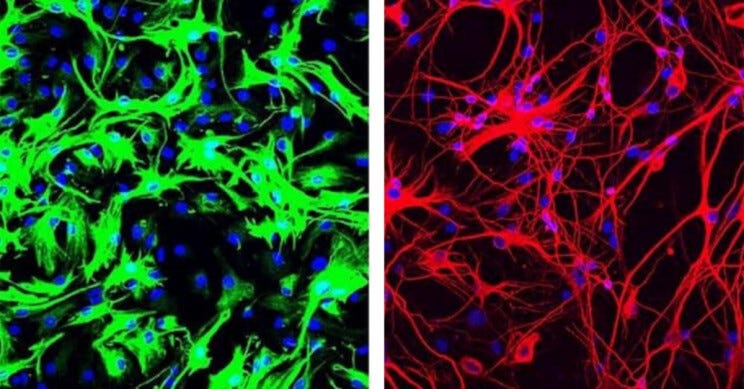
Left: Mouse astrocytes before reprogramming; Right: Neurons from astrocytes after reprogramming. Image credit: UCSD Health Services
One-Time Neuron Treatment Cured Parkinson’s Disease in Mice
According to a recent study published in Nature, researchers have found a way to create neurons. The breakthrough method could mean huge things for how Parkinson’s Disease and other degenerative diseases are treated. The scientists hope that the findings will allow them to reverse the symptoms of such diseases by applying them to gene therapy and then introducing altered cells back into damaged brains.
The method developed by the University of California San Diego researchers involved converting astrocytes, which are supporting cells in the brain which serve no cognitive function, into neurons. Specifically, the researchers shut down the production of a protein called PTB in the brains of mice, which allowed the astrocytes to be turned into neurons. The mice in question suffered from movement deficiencies stemming from a lack of dopamine-producing neurons, the loss of which is also responsible for the onset of Parkinson's. The process raised the number of neurons by almost a third, while restoring dopamine production to a normal level.
While there’s still a ways to go before anything conclusive can be determined, one thing is for sure - scientists cured mice of Parkinson’s disease and the mice remained symptom free for the rest of their lives.
The future of gene therapy
Microsoft, but without brick and mortar
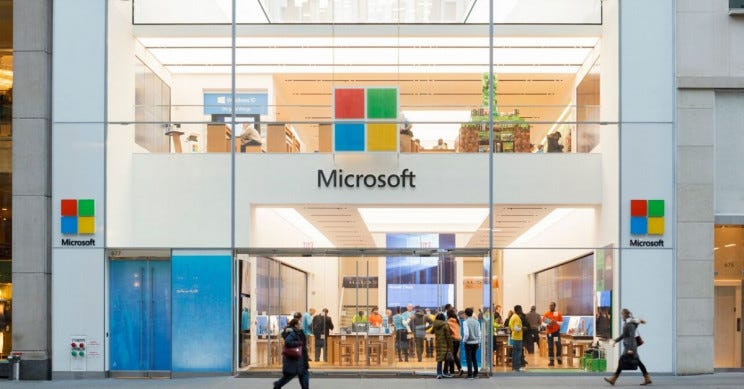
The Microsoft Store on Fifth Avenue, Manhattan. Image credit: wdstock/iStock
Microsoft to Permanently Close Almost All Retail Stores
Yesterday, Microsoft announced that it’s taking a big step back from retail. All but four of its global Microsoft Stores will close permanently. The computing giant also said that they will be focusing on digital retail from now on.
New York City (Fifth Ave), London (Oxford Circus), Sydney (Westfield Sydney) and the Redmond campus are the only places that get to keep their stores - all other stores around the world will close. The remaining four stores will be turned into experience centres.
Microsoft was planning the move for next year, but the COVID-19 pandemic has accelerated the plans somewhat. The announcement also helps explain why Microsoft had yet to reopen a single Microsoft Store after they were closed due to the pandemic.
Brick and mortar is evolving, not dying
Demand for The Last of Us Part 2 soars

An immensely popular successor to the original. Image credit: Naughty Dog
The Last of Us Part 2 sells 4M, becomes fastest-selling Sony game ahead of Spider-Man
The release of the Last of US Part 2 has broken records for Sony. After its release on June 19th, Sony has sold over 4 million copies of the game.
The record number of sales means that The Last of Us 2 has performed better than other PlayStation-made games such as God of War, Marvel’s Spider-Man and Uncharted 4: A Thief’s End.
The game has been praised by critics and fans alike. Sporting detailed visuals, excellent voice acting and great gameplay, millions have purchased and played the game since release. Some have criticised both the game’s story and marketing but overall, it seems that Sony and Naughty Dog, Sony’s video game studio, have hit the nail on the head with this game.
Some of the best videogames ever
NASA, smash
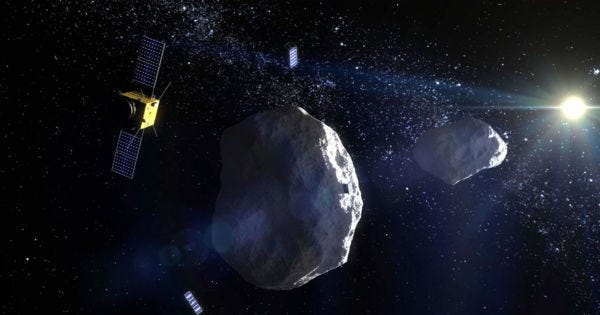
NASA plans to smash a spacecraft into a small moon. Image credit: ESA
NASA Renames Small Moon It Plans to Smash With SpaceX
In a 2022 mission known as the Double Asteroid Redirection Test, or DART, NASA plans to crash a spacecraft into a tiny moon. The mission will serve as a test for a new asteroid-diversion strategy for any asteroids heading toward Earth.
The moon in question is tiny - only 160 metres across. Its orbiting the asteroid Didymos, which flew near Earth in 2003. The small object is perfect for this kind of test - it’s tiny and relatively close to Earth. However, NASA has decided that its current name, Didymos B, isn’t particularly cool. Its now been renamed to Dimorphos.
NASA is collaborating with SpaceX and the European Space Agency on DART. In 2021, SpaceX will launch a Falcon 9 rocket on a crash course with Dimorphos. The goal is for the rocket to impact the moon so hard that it gets knocked out of its normal orbit around Didymos. Then, in 2024, the ESA will launch Hera, a follow-up mission to track Dimorphos’ new orbit around Didymos.
One of our favourite space missions so far
Start-up Stories
Scorechain

Image credit: Scorechain
Scorechain is a Luxembourgish start-up focused on Bitcoin compliance solutions. Their goal is to provide business intelligence and big data for blockchain technologies. More specifically, the company provides customers with risk analyses for transactions. Additionally, in 2016, Scorechain launched an updated version of Scorechain Index, its bitcoin analysis platform. The platform offers activity reports and tools that allow for the regulation of Bitcoin movements.